Solar Power for Pharmaceutical Plants: Complete Guide for Indian Pharma Companies
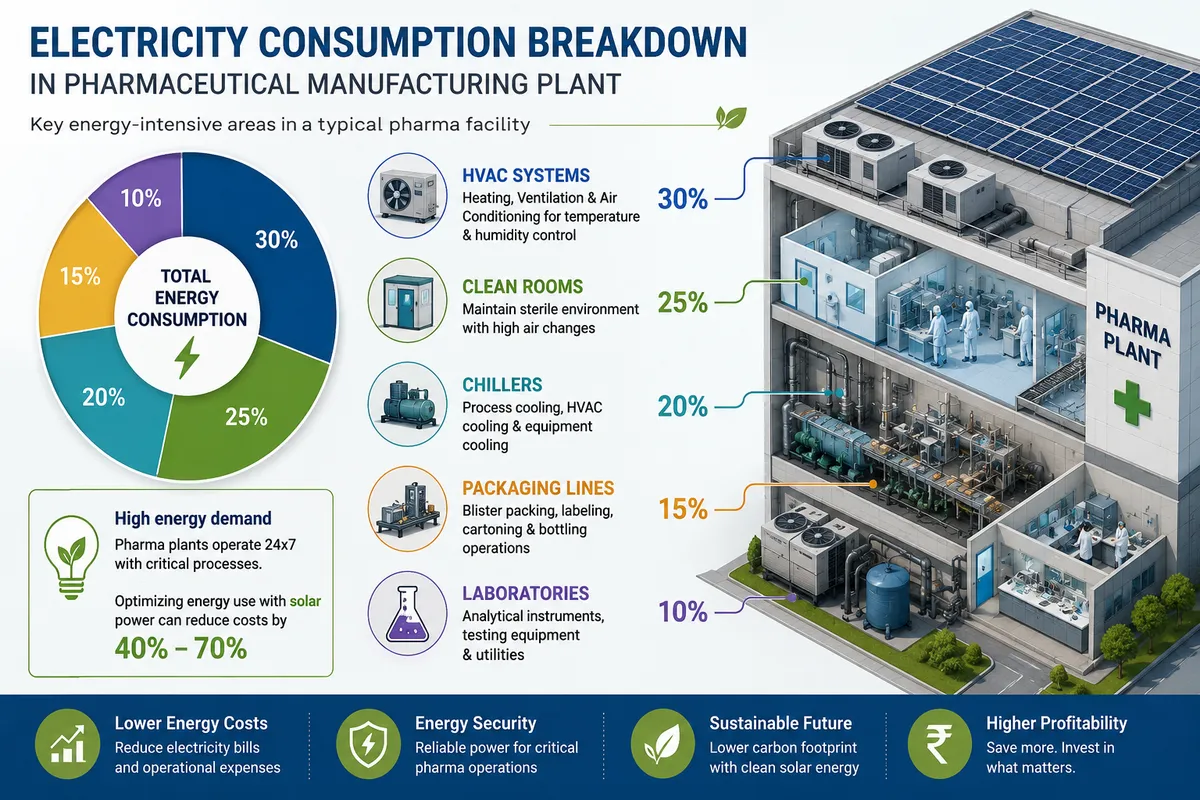
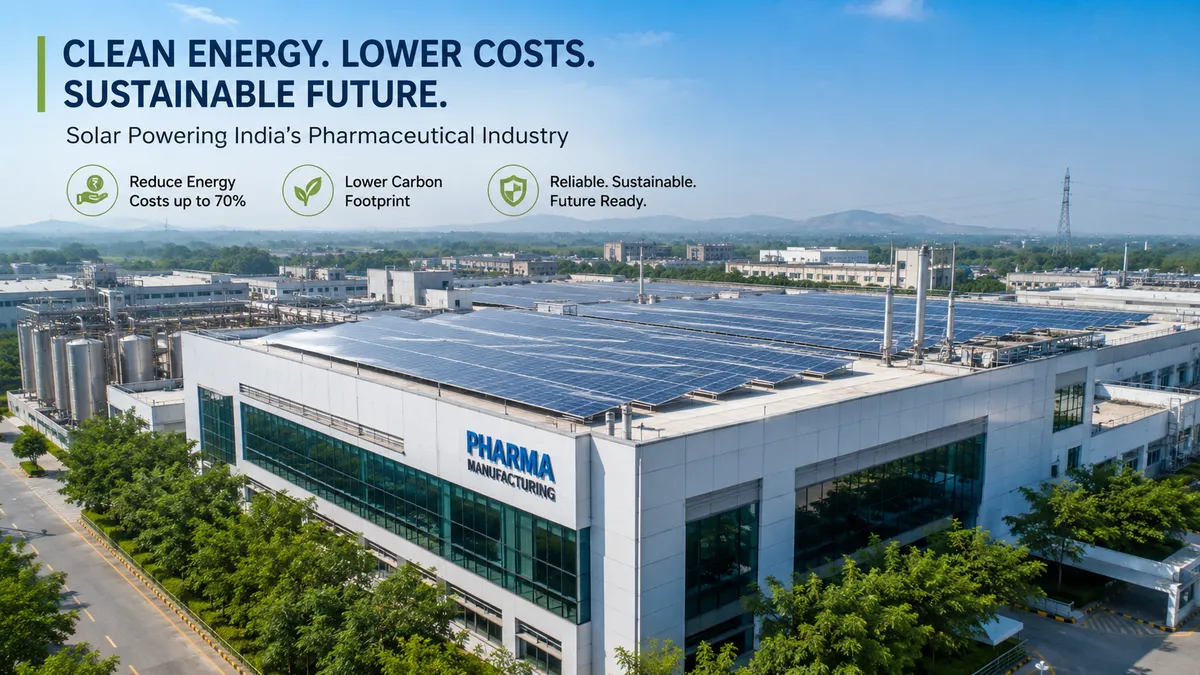 India's pharmaceutical industry is one of the largest energy-consuming manufacturing sectors. From HVAC systems and clean rooms to process equipment, cold storage facilities, laboratories, and 24/7 production lines, pharmaceutical plants require a stable and uninterrupted power supply.
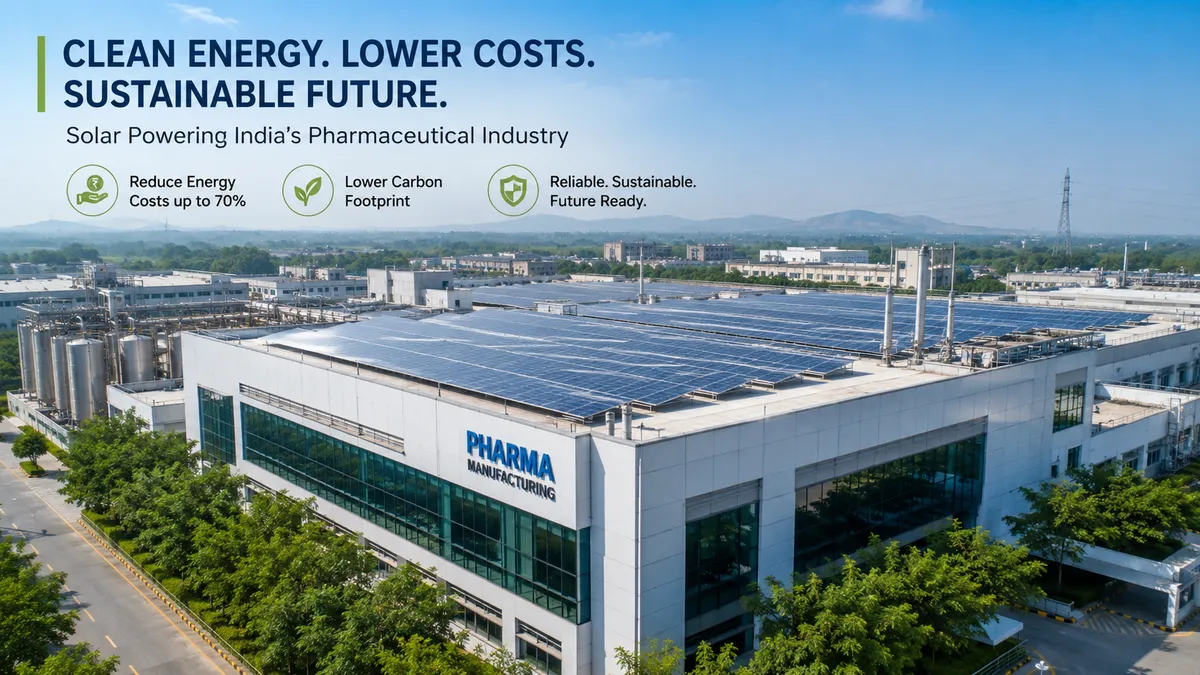
As electricity tariffs continue to rise, many pharma manufacturers are turning toward solar power for pharmaceutical plants to reduce operating expenses, improve sustainability, and strengthen ESG compliance.
A well-designed industrial solar system can reduce electricity costs by 40%–70%, provide long-term energy price stability, and significantly improve profitability.
In this guide, we'll explore how industrial solar for pharmaceutical sector facilities works, its benefits, costs, ROI, implementation process, and why it has become a strategic investment for pharmaceutical companies in India.
Why Pharmaceutical Plants Need Solar Energy
Pharmaceutical manufacturing is highly energy intensive.
A typical pharma facility consumes electricity for:
- Clean room operations
- HVAC systems
- Chillers
- Process machinery
- Water treatment plants
- Quality control laboratories
- Packaging lines
- Refrigerated storage
- Data centers and automation systems
Energy costs often represent a significant portion of operational expenditure.
With industrial electricity tariffs ranging between ₹7 and ₹12 per unit across many Indian states, reducing energy expenses has become a major priority for pharmaceutical companies.
Solar energy provides a reliable solution that helps manufacturers generate their own power while reducing dependency on the grid.
Energy Challenges Faced by Pharma Companies
Rising Electricity Costs
Industrial tariffs continue to increase due to fuel costs, transmission charges, and regulatory revisions.
Continuous Operations
Many pharmaceutical plants operate 24/7, making energy reliability critical.
ESG Compliance Pressure
Global buyers increasingly prefer suppliers that demonstrate sustainability initiatives and carbon reduction commitments.
Export Market Requirements
Pharma exporters supplying Europe and North America are facing increasing pressure to report environmental performance and renewable energy adoption.
Benefits of Solar Power for Pharmaceutical Plants
1. Significant Reduction in Electricity Bills
A properly designed solar system can offset a large percentage of daytime electricity consumption.
Benefits include:
- Lower monthly electricity bills
- Reduced dependence on DISCOM tariff increases
- Better cost forecasting
Many pharmaceutical facilities achieve annual savings worth several crores through solar adoption.
2. Attractive Return on Investment
Industrial solar projects typically offer:
| Parameter | Typical Range |
| Project Life | 25+ Years |
| Payback Period | 3–5 Years |
| Internal Rate of Return (IRR) | 18%–25% |
| Electricity Cost Savings | 40%–70% |
After the payback period, generated electricity effectively becomes a long-term low-cost energy source.
3. Improved Sustainability Performance
Solar energy helps pharmaceutical companies:
- Reduce carbon emissions
- Meet ESG goals
- Support sustainability reporting
- Improve brand reputation
This is increasingly important for multinational pharmaceutical companies and export-focused manufacturers.
4. Energy Price Protection
Unlike grid electricity prices that fluctuate over time, solar energy offers predictable energy costs for decades.
This provides greater financial stability and protects against future tariff hikes.
5. Better Corporate Image
Investing in renewable energy demonstrates commitment toward environmental responsibility.
This can positively influence:
- Investors
- Customers
- Global procurement teams
- Regulatory stakeholders
Types of Solar Systems for Pharmaceutical Manufacturing
Rooftop Solar Systems
Suitable when large roof areas are available.
Advantages:
- Utilizes unused roof space
- Lower installation cost
- Faster implementation
Best for:
- Manufacturing plants
- Warehouses
- Packaging facilities
Ground-Mounted Solar Plants
Ideal for pharma companies with available land.
Advantages:
- Larger system capacities
- Easier maintenance
- Future expansion flexibility
Open Access Solar
For facilities with limited space.
In this model:
- Solar plant is located offsite
- Electricity is supplied through the grid
- Companies benefit from lower power costs
Large pharmaceutical manufacturers increasingly adopt open-access solar solutions.
Solar Capacity Requirements for Pharmaceutical Facilities
Capacity depends on electricity consumption.
| Monthly Consumption | Recommended Solar Capacity |
| 50,000 Units | 300–400 kW |
| 1,00,000 Units | 700–800 kW |
| 2,00,000 Units | 1.2–1.5 MW |
| 5,00,000 Units | 3–4 MW |
A detailed energy audit should always be conducted before system design.
Cost of Installing a Solar Plant for Pharma Company
Indicative industrial solar pricing in India:
| System Size | Approximate Investment |
| 250 kW | ₹0.95 – ₹1.3 Crore |
| 500 kW | ₹1.9 – ₹2.6 Crore |
| 1 MW | ₹3.5 – ₹4.5 Crore |
| 2 MW | ₹7 – ₹9 Crore |
Actual costs vary depending on:
- Site conditions
- Module technology
- Inverter selection
- Structural requirements
- Transmission infrastructure
ROI and Payback Period
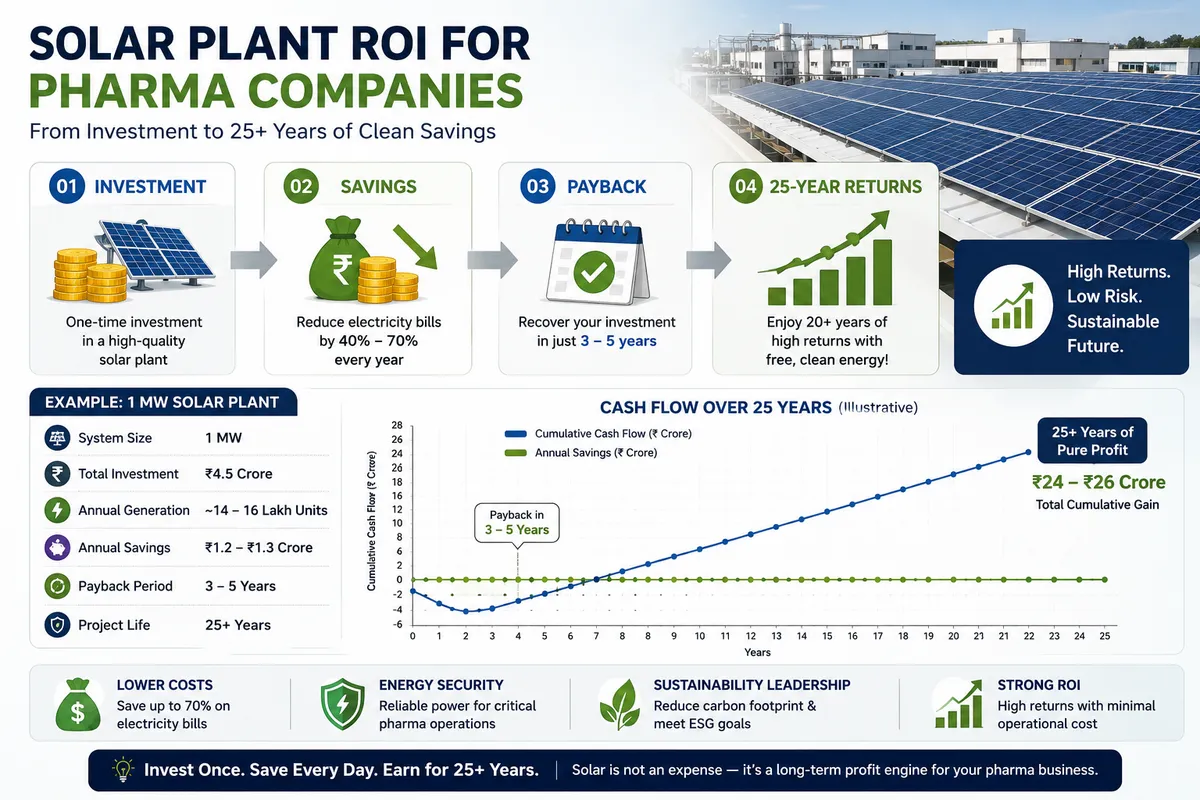 Example:
1 MW Solar Plant
Annual Generation:
≈ 14–16 lakh units Average Grid Tariff:
₹8.50/unit Annual Savings:
₹1.2–1.3 Crore Project Cost:
₹4.5 Crore Estimated Payback:
3.5–4 Years Expected Life:
25+ Years This makes industrial solar one of the highest-return infrastructure investments available to manufacturing companies.
ESG and Sustainability Benefits
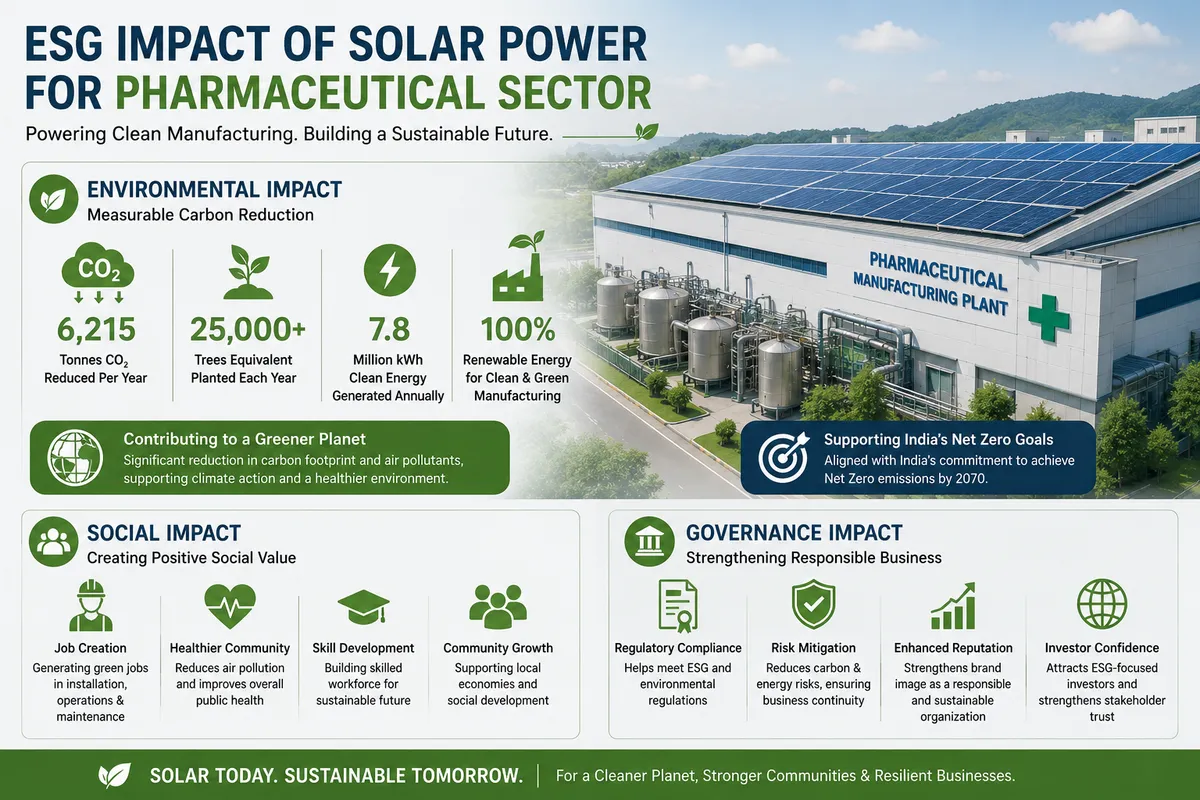 Global pharmaceutical supply chains increasingly prioritize sustainability.
Solar adoption helps companies:
Environmental Benefits
- Reduced greenhouse gas emissions
- Lower carbon footprint
- Reduced fossil fuel dependency
Social Benefits
- Supports India's renewable energy goals
- Demonstrates responsible manufacturing
Governance Benefits
- Strengthens ESG reporting
- Improves investor confidence
Many multinational pharmaceutical companies now require sustainability disclosures from suppliers.
Government Policies Supporting Industrial Solar
Indian businesses can benefit from:
- Net Metering (where applicable)
- Open Access Policies
- Green Energy Open Access Rules
- Accelerated Depreciation Benefits (subject to prevailing regulations)
- Renewable Energy Certificates (RECs)
Policies differ by state and should be reviewed before project implementation.
Solar Implementation Process
Step 1: Energy Assessment
Analyze:
- Electricity bills
- Load profile
- Operational hours
Step 2: Site Survey
Evaluate:
- Rooftop availability
- Structural strength
- Land availability
Step 3: System Design
Prepare:
- Capacity sizing
- Generation estimates
- Financial projections
Step 4: Installation
Includes:
- Civil works
- Module installation
- Inverters
- Electrical integration
Step 5: Commissioning
Testing and synchronization with the grid.
Step 6: Monitoring & Maintenance
Continuous performance monitoring ensures maximum generation.
How to Choose the Right Solar EPC Partner
Before investing, evaluate:
Experience in Industrial Projects
Choose an EPC with proven experience in industrial and pharmaceutical facilities.
Engineering Capability
Ensure detailed energy analysis and system optimization.
Quality Components
Use Tier-1 solar modules and reliable inverter brands.
O&M Support
Long-term monitoring and maintenance support is essential.
Regulatory Expertise
The EPC should manage approvals, compliance, and utility coordination.
Conclusion
The pharmaceutical industry is under constant pressure to reduce operational costs while improving sustainability performance.
Investing in solar power for pharmaceutical plants enables companies to achieve both objectives simultaneously.
A well-designed solar plant for pharma company operations can deliver substantial electricity savings, strong financial returns, energy security, and improved ESG performance for more than two decades.
As electricity prices continue to rise and sustainability becomes a competitive advantage, industrial solar for pharmaceutical sector facilities is rapidly becoming a strategic business investment rather than just an environmental initiative.
Companies that adopt solar today position themselves for lower operating costs, stronger profitability, and a greener future.
Frequently Asked Questions (FAQs)
Q1. Is solar power suitable for pharmaceutical manufacturing plants?
Yes. Solar power is highly suitable for pharmaceutical plants because they consume large amounts of electricity for HVAC, clean rooms, laboratories, refrigeration, and production equipment.
Q2. How much can a pharmaceutical company save with solar energy?
Most pharmaceutical facilities can reduce electricity costs by 40%–70%, depending on plant size, energy consumption, and solar system capacity.
Q3. What is the payback period for a solar plant in the pharmaceutical sector?
Industrial solar projects typically achieve payback within 3–5 years while providing benefits for 25+ years.
Q4. Can pharmaceutical companies use open-access solar?
Yes. Open-access solar is an excellent option for pharma companies with limited rooftop or land availability.
Q5. What size solar plant does a pharma company need?
The required capacity depends on monthly electricity consumption. A detailed energy audit is recommended before finalizing system size.
Q6. Does solar affect pharmaceutical manufacturing quality standards?
No. Solar systems are integrated with existing electrical infrastructure and do not affect manufacturing quality or compliance standards.
Q7. Can solar help pharma companies achieve ESG goals?
Yes. Solar energy significantly reduces carbon emissions and supports sustainability and ESG reporting requirements.