
How Much Does It Cost to Charge an Electric Car in India in 2026?
Electric vehicle (EV) charging costs in India typically range between ₹6 and ₹12 per kWh at home and ₹10 to ₹25 per kWh at public charging stations. For most electric cars, the EV charging cost per km falls between ₹0.80 and ₹2.50 per km, making EVs significantly cheaper to operate than petrol or diesel vehicles.
If you’re planning to buy an electric car or already own one, understanding EV charging cost per kWh, charging costs at home, and cost per kilometre can help you estimate your monthly savings accurately.
Quick Summary: EV Charging Costs in India
| Parameter | Typical Cost |
| Home Charging Cost | ₹6–₹12 per kWh |
| Public AC Charging | ₹10–₹18 per kWh |
| Public DC Fast Charging | ₹15–₹25 per kWh |
| EV Charging Cost Per KM | ₹0.80–₹2.50 |
| Petrol Car Running Cost | ₹6–₹12 per km |
| Potential Savings | Up to 80% |
What Is EV Charging Cost Per kWh?
Electricity consumed by EVs is measured in kilowatt-hours (kWh), similar to how petrol is measured in litres.
A kWh represents one unit of electricity.
For example:
- 1 kWh = 1 unit of electricity
- If your electricity tariff is ₹8/unit, then charging 10 kWh costs ₹80
- If your EV battery requires 40 kWh for a full charge, charging costs ₹320
EV Charging Cost Formula
EV Charging Cost = Battery Capacity (kWh) × Electricity Tariff (₹/kWh)
Example:
Battery Capacity = 50 kWh Electricity Rate = ₹8/kWh Charging Cost = 50 × ₹8 = ₹400 A full charge would cost approximately ₹400.
How Much Does It Cost to Charge an Electric Car at Home?
Home charging remains the most economical option for EV owners.
Most Indian households pay electricity tariffs between ₹6 and ₹12 per unit depending on:
- State
- Consumption slab
- DISCOM tariff structure
- Residential electricity category
Home Charging Cost Examples
| Battery Size | Electricity Rate | Full Charge Cost |
| 25 kWh | ₹8/unit | ₹200 |
| 35 kWh | ₹8/unit | ₹280 |
| 50 kWh | ₹8/unit | ₹400 |
| 60 kWh | ₹8/unit | ₹480 |
| 75 kWh | ₹8/unit | ₹600 |
For users with rooftop solar systems, charging costs can be reduced even further.
Many EV owners who install residential solar systems effectively charge their vehicles at near-zero marginal cost during daylight hours.
How Much Does Public EV Charging Cost?
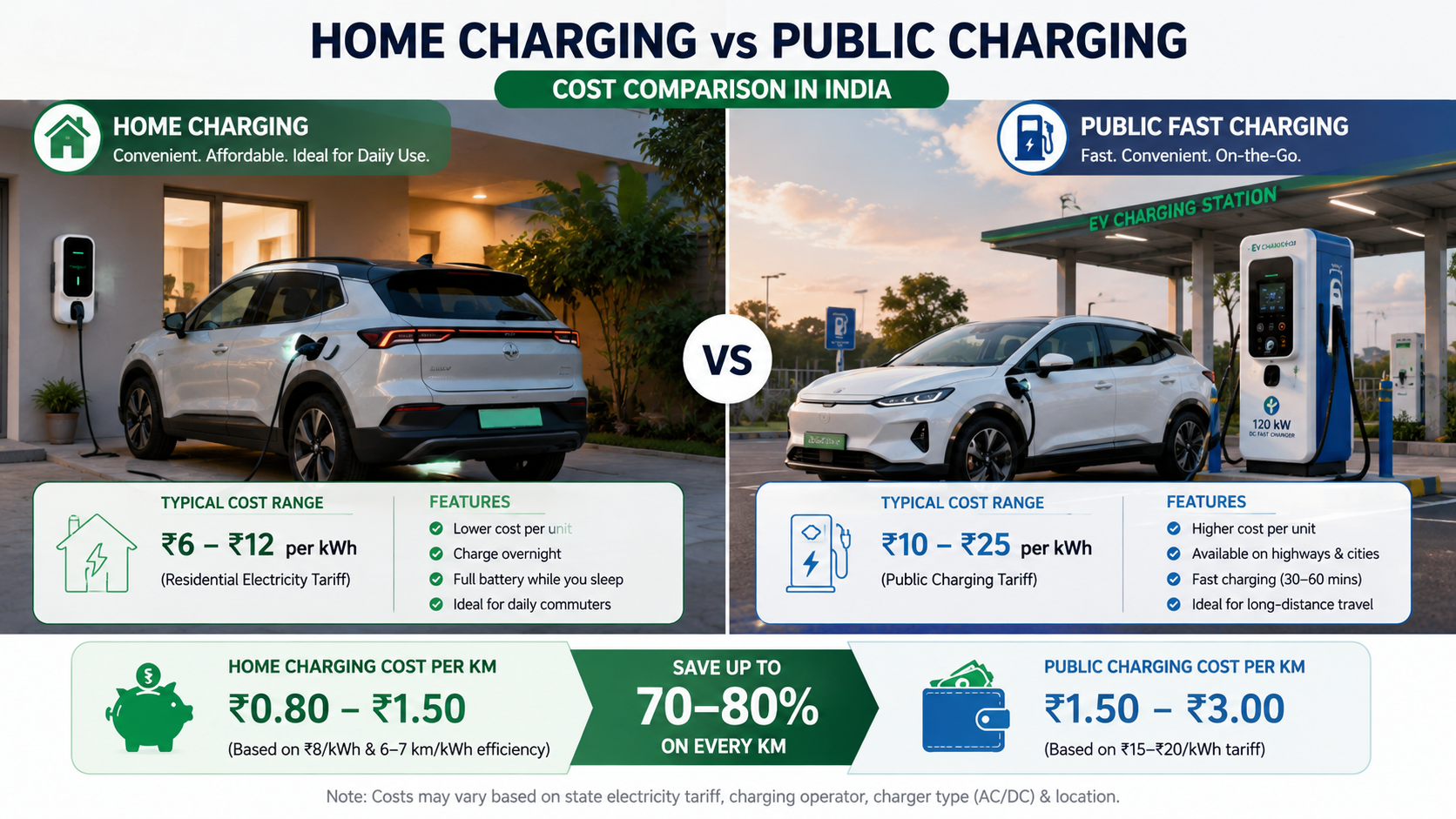
Public charging stations generally charge higher tariffs because operators must recover:
- Charger investment costs
- Transformer and electrical infrastructure costs
- Land rental expenses
- Maintenance costs
- Software and payment platform expenses
Typical Public Charging Rates
| Charger Type | Cost per kWh |
| AC Charger | ₹10–₹18 |
| DC Fast Charger | ₹15–₹25 |
| Ultra-Fast Charger | ₹18–₹30 |
Example
A 50 kWh battery charged at a DC fast charger charging ₹20/kWh:
50 × ₹20 = ₹1,000 Although public charging costs more than home charging, it offers convenience and significantly faster charging speeds.
EV Charging Cost Per KM in India
One of the most searched questions is:
“What is the EV charging cost per km?” The answer depends on:
- Battery efficiency
- Vehicle size
- Driving conditions
- Charging tariff
Formula
EV Charging Cost Per KM = Electricity Cost Per kWh ÷ Vehicle Efficiency (km/kWh)
Example 1
Electricity Rate = ₹8/kWh Efficiency = 7 km/kWh Cost Per KM = ₹8 ÷ 7 = ₹1.14/km
Example 2
Public Charging Rate = ₹18/kWh Efficiency = 6 km/kWh Cost Per KM = ₹18 ÷ 6 = ₹3/km
EV Cost Per KM vs Petrol Cars
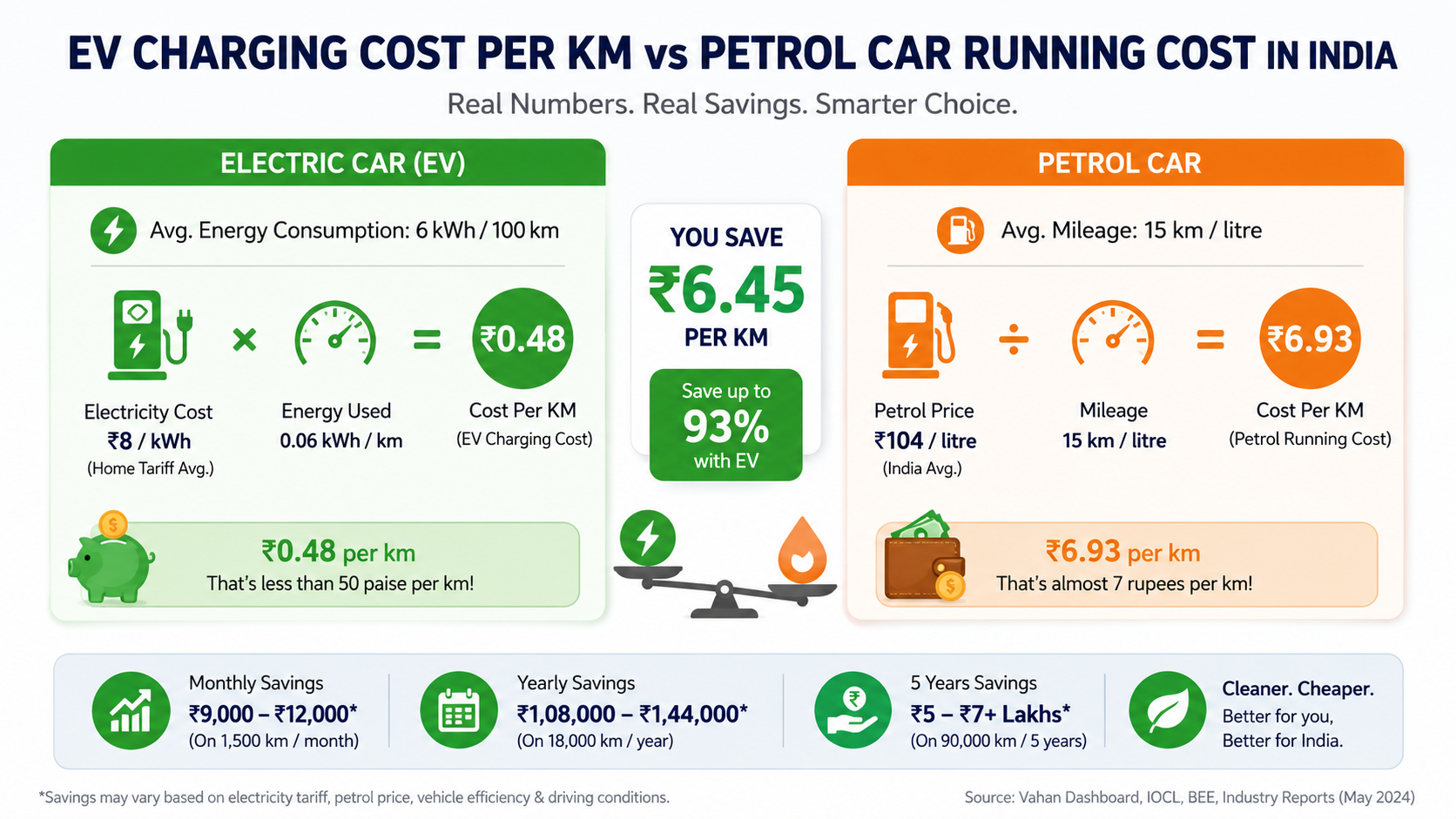 The biggest financial advantage of EVs comes from lower running costs.
| Vehicle Type | Approx Running Cost |
| Electric Car (Home Charging) | ₹0.80–₹1.50/km |
| Electric Car (Public Charging) | ₹1.50–₹3.00/km |
| Petrol Hatchback | ₹6–₹8/km |
| Petrol SUV | ₹8–₹12/km |
| Diesel SUV | ₹6–₹10/km |
A driver covering 1,500 km monthly could save ₹8,000–₹15,000 every month by switching from a conventional fuel vehicle to an EV.
EV Charging Cost for Popular Electric Cars in India
Tata Nexon EV
| Parameter | Value |
| Battery | 45 kWh |
| Home Charging Cost @ ₹8/kWh | ₹360 |
| Range | 400 km |
| Cost Per KM | ₹0.90 |
MG ZS EV
| Parameter | Value |
| Battery | 50.3 kWh |
| Home Charging Cost | ₹402 |
| Range | 461 km |
| Cost Per KM | ₹0.87 |
Mahindra BE 6
| Parameter | Value |
| Battery | 59 kWh |
| Home Charging Cost | ₹472 |
| Range | 500+ km |
| Cost Per KM | ₹0.94 |
Factors That Affect EV Charging Costs
1. Electricity Tariff
State-wise electricity rates differ significantly across India.
2. Home vs Public Charging
Home charging can be 40–70% cheaper than public charging.
3. Battery Size
Larger batteries cost more to charge but often deliver better range.
4. Driving Style
Aggressive acceleration and high-speed driving reduce efficiency.
5. Climate Conditions
Extreme heat or cold may increase energy consumption.
6. Charging Losses
Most EVs experience 5–15% charging losses due to heat and conversion inefficiencies.
Can Solar Reduce EV Charging Costs?
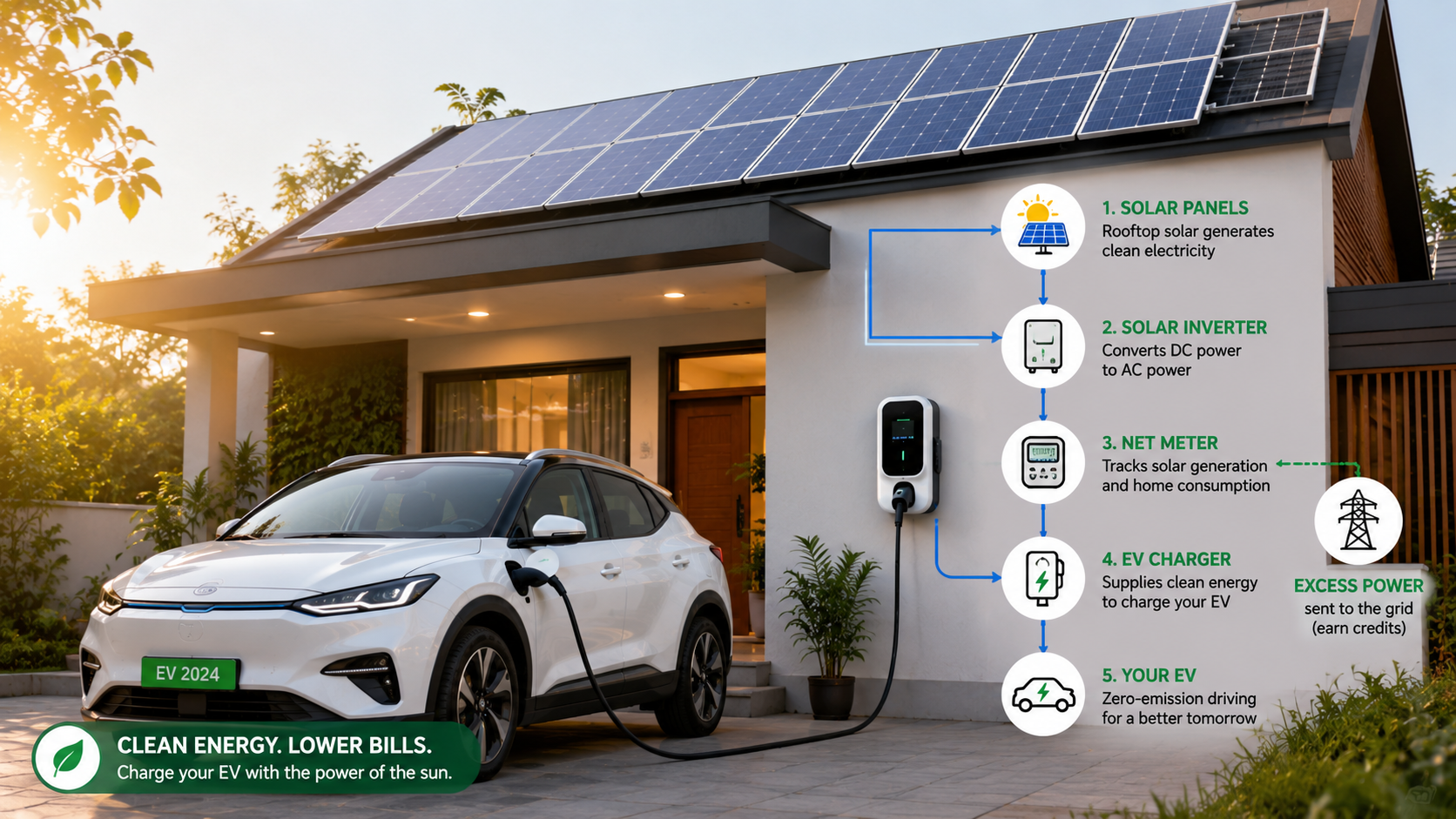
Yes.
Installing rooftop solar can dramatically lower EV charging expenses.
Benefits include:
- Lower electricity bills
- Reduced dependence on grid power
- Faster return on solar investment
- Sustainable transportation
A residential solar system generating 10–15 units daily can offset a significant portion of EV charging requirements.
For households driving regularly, solar-powered EV charging can bring charging costs close to zero during daytime charging cycles.
Final Verdict
Electric cars offer one of the lowest running costs among all passenger vehicles available in India today. While public charging costs vary based on charger type and operator tariffs, home charging remains highly economical.
For most Indian EV owners, the charging cost per kWh ranges between ₹6 and ₹12 at home, resulting in an EV charging cost per km of approximately ₹1. This is substantially lower than petrol and diesel vehicles, making EVs an attractive long-term investment.
As electricity infrastructure improves and rooftop solar adoption increases, EV charging costs are expected to become even more affordable in the coming years.
FAQ Section
What is the average EV charging cost per kWh in India?
Most residential users pay between ₹6 and ₹12 per kWh, while public charging stations charge ₹10–₹25 per kWh.
How much does it cost to fully charge an electric car?
A full charge can cost between ₹150 and ₹1,200 depending on battery size and charging tariff.
What is the EV charging cost per km?
Most electric cars cost ₹0.80–₹2.50 per km to drive.
Is public EV charging more expensive than home charging?
Yes. Public charging typically costs 40–100% more due to infrastructure and operational expenses.
Which is cheaper: EV or petrol car?
EVs are generally 60–80% cheaper to operate per kilometre than petrol cars.
Does fast charging cost more?
Yes. DC fast chargers and ultra-fast chargers typically charge higher tariffs than AC chargers.
Can rooftop solar reduce EV charging costs?
Yes. Solar-powered EV charging can significantly reduce or even eliminate daytime charging costs.
Is EV charging cheaper than petrol?
Yes. EV charging typically costs 60–80% less per kilometre than petrol.
What is the average EV charging cost per kWh in India?
Home charging usually costs ₹6–₹12 per kWh, while public charging generally ranges from ₹10–₹25 per kWh.
How much does a full EV charge cost?
Depending on battery size and tariff, a full charge may cost anywhere from ₹150 to ₹1,200.
How much does an EV cost per km?
Most electric cars in India cost between ₹0.80 and ₹2.50 per kilometre to operate.
Can I charge my EV using solar power?
Yes. Rooftop solar systems are increasingly being used for EV charging, reducing electricity expenses and improving sustainability.


